What Size of Solar System Do I Need for My Home?

Moha Tuano • December 2, 2025

Share this article

Switching your home to solar is more than just an upgrade—it’s a chance to take control of your energy, reduce your bills, and support a cleaner future. But one of the first big questions every homeowner faces is “What size of solar system do I need?”

There’s no one-size-fits-all answer. The right system size depends on your household’s electricity use, the layout and shading of your roof, your budget, and the rules set out in Alberta’s micro-generation regulation. Let’s dive into how it all works.

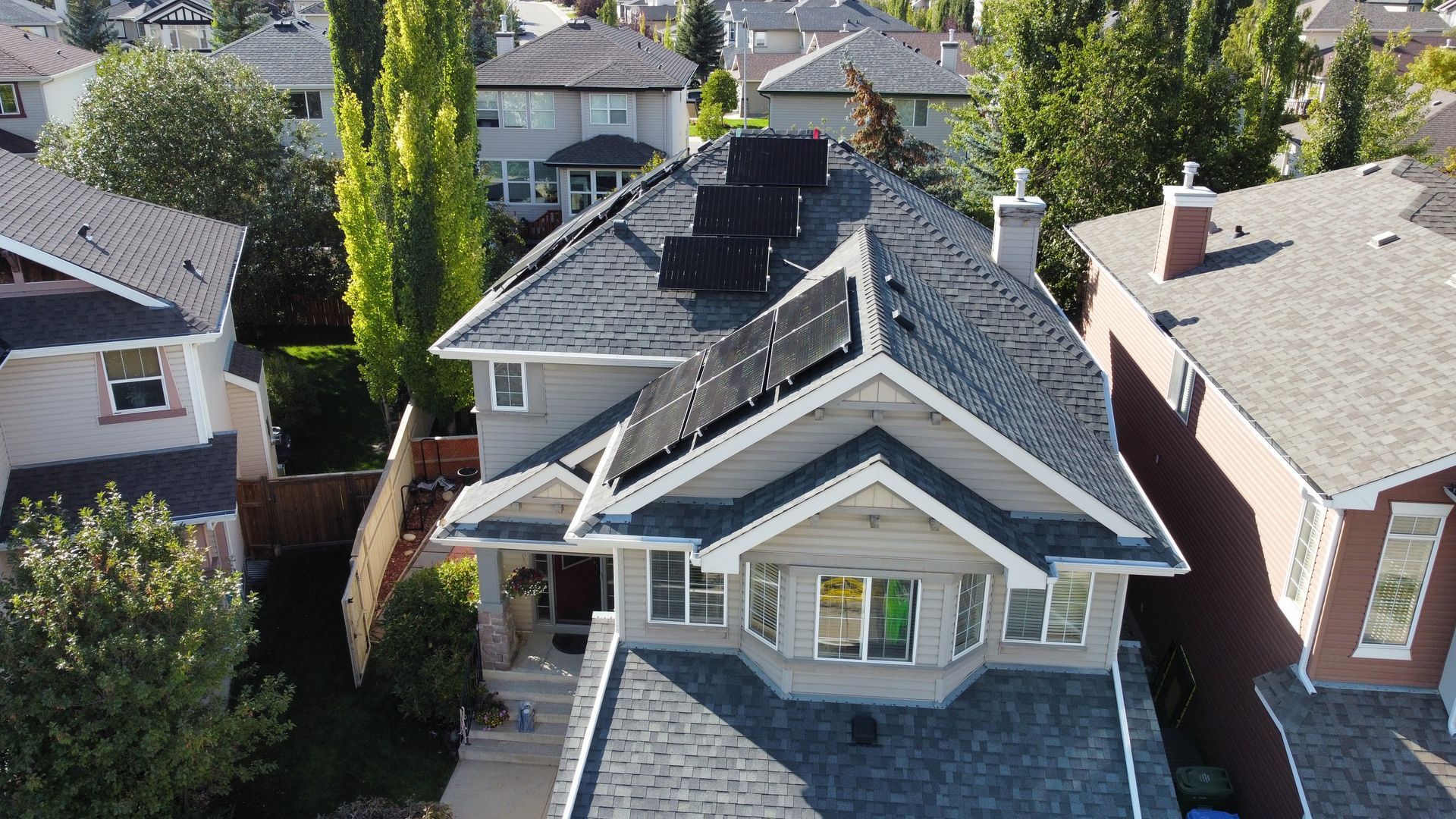
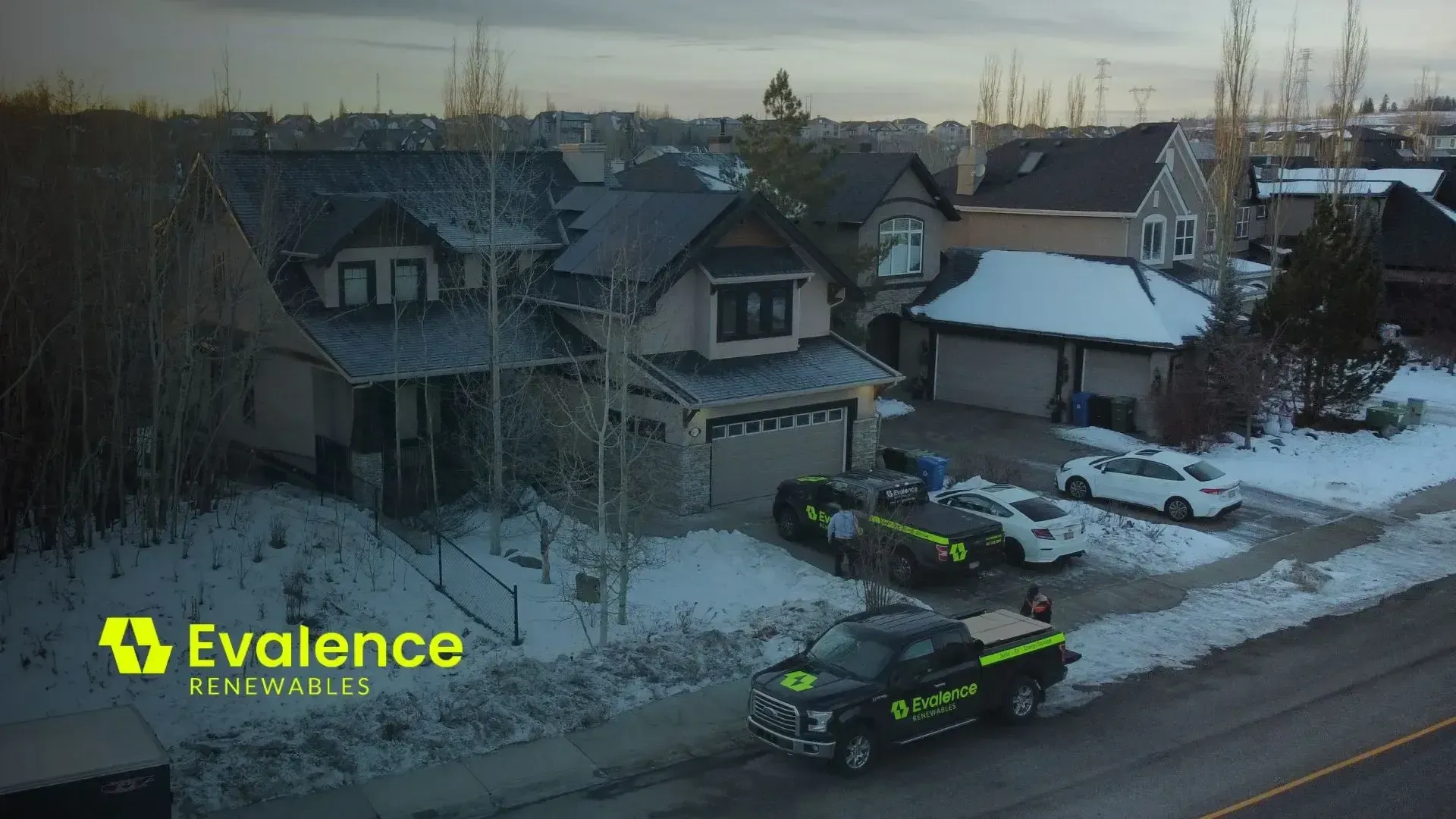
Roof-mount Solar Modules in Calgary, Alberta

Understanding Alberta’s Micro-generation Regulation

If you live in Alberta, it’s important to understand the rules set by the Micro‑Generation Regulation under the Alberta Utilities Commission (AUC). These rules let homeowners generate electricity through renewable sources—like solar panels—and stay connected to the grid. https://www.alberta.ca/micro-generation

Here’s what you need to know:

  • The system you install must be sized to meet your own annual electricity consumption (or a portion of it). In other words, your solar setup isn’t meant to produce far more than your annual usage unless there’s good reason. https://www.auc.ab.ca/micro-generation/
  • When you generate more electricity than you use, you can send that excess back to the grid and receive credits from your retailer. But you’ll still pay fixed costs like delivery, transmission and other system charges.
  • The regulation applies to systems up to 5 MW (for residential scale this is far above typical and defines “micro-generation” systems as those sized to meet a customer’s use or projected use.
  • If you anticipate future electricity needs (for example you will add an EV, heat pump, or new major appliance) you may be able to justify installing a slightly larger system—but you’ll need supporting evidence (e.g., purchase receipts, permit, etc.). https://www.auc.ab.ca/micro-generation

In essence: the regulation allows you to offset “up to” your annual consumption, with room for modest future growth if justified.

How We Calculate Your Ideal Solar System Size

At Evalence we’ve developed a process to ensure the system we propose meets your real needs—and aligns with the micro-generation rules. Here’s how we do it:


  1. Review your electricity bills. We look at your last 12 months of usage (kWh) to determine your annual consumption baseline.
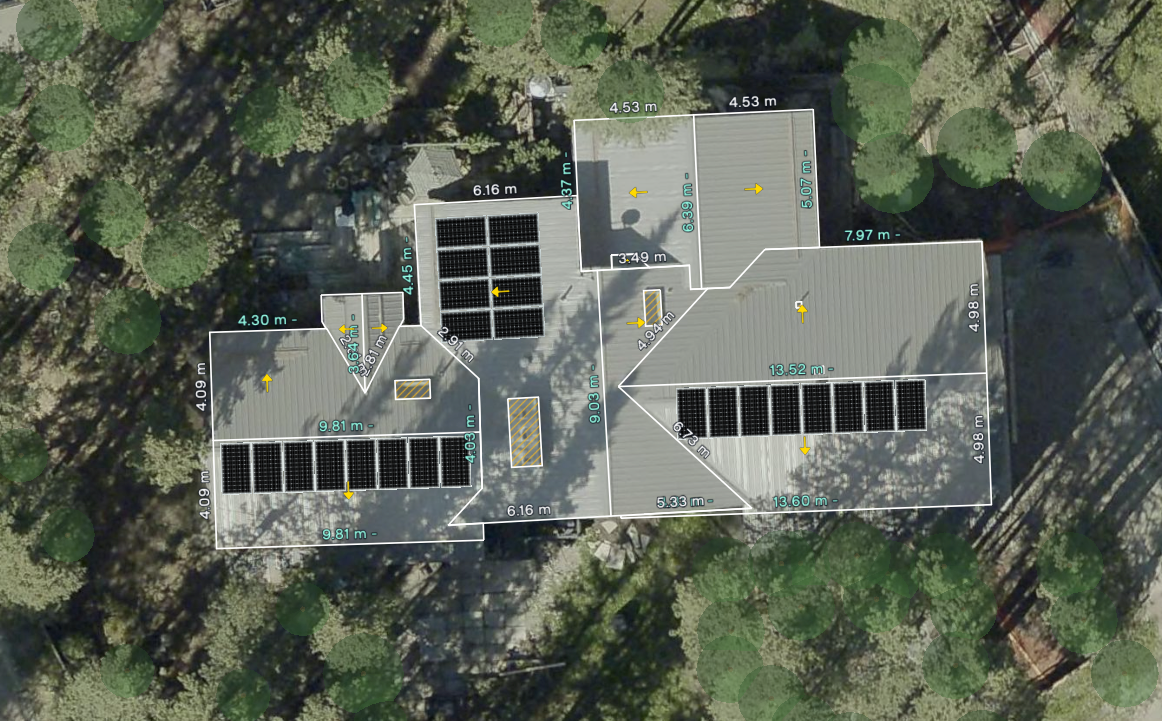
  2. Model your roof in 3D and map shading. Using design software, we reconstruct your roof physically—tilt, orientation, areas with sunlight exposure—and note shading from trees or nearby houses.
  3. Identify optimal panel placement. We aim to place solar modules in the high-performing zones of your roof (south, southeast or southwest facing areas typically). That maximizes real output.
  4. Factor in real-world losses. We account for things like snow cover, tree shading, roof obstructions, and winter conditions (very relevant in Alberta!). That gives us a more accurate production forecast rather than a “best case” ideal.
  5. Design for about 100 % offset of annual use – if feasible. Because under the regulation, the intention is to offset your total annual consumption (or a portion thereof) rather than significantly oversize your system.


By going through those steps we can give you a realistic system size, expected production, likely savings, and timeline—without surprises.

Modelling roof with Solar Panels using Aurora Solar

When We Design for Less Than 100% Offset

While 100% offset is a solid target, in practice there are situations where we recommend a smaller system. Some reasons may include:

  • Limited roof space or shading constraints.
    Your roof may simply not have enough unobstructed, sun-facing area to accommodate enough panels to hit 100% of your annual use. In that case we’ll design the most efficient system possible.
  • Budget considerations.
    You might prefer to start with a smaller system now (to reduce upfront cost) and expand later when roof or electric panel capacity allows.
  • Electrical infrastructure constraints.
    If your home’s electrical service panel or wiring is old or limited in capacity, you may need to stay within a size that your system safely supports—or budget for an upgrade.

In each of these cases, a smaller system still brings significant benefits: lower bills, lower carbon footprint, and potential to expand in the future.

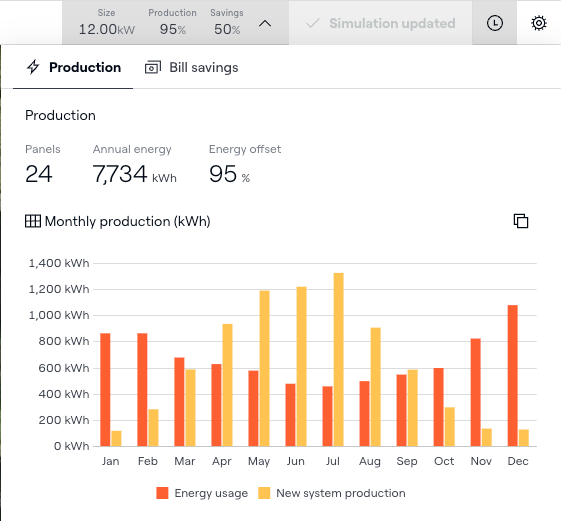
Estimated Solar Production for 12kW System, in Bragg Creek, Alberta.

Why Accurate Solar Modeling Matters

It might be tempting to simply choose the biggest system you can squeeze onto your roof—but accuracy pays off. Here’s why we focus on modeling details:

  • To stay within the rules of the Micro-Generation Regulation (you want to size for your usage, not wildly oversize).
  • To provide realistic expectations of savings—so you aren’t promised the moon and then disappointed.
  • To design for your unique conditions (roof tilt, shading, snow, obstructions) rather than generic assumptions.
  • To avoid costly surprises (e.g., unexpected shading reduces production significantly, or your system is oversized and you lose some benefits).

We believe in being transparent about how much you’ll get—not just what you hope to get.

Ready to Find Your Ideal System Size?

Every home and household is different. Whether you’re looking to offset 50 %, 75 % or 100 % of your annual electricity consumption, we’ll map out your available roof space, model your potential solar output, and design a system that fits your goals and budget.

📞 Contact Evalence Renewables:

Phone: +1 (587)435-7349

Email:  info@evalence.ca

Website: https://www.evalence.ca


Get your free solar assessment today and let’s look at what your home could generate, what you could save, and how long it might take to pay off your investment.

Recent Posts

By Tyler Sieben December 2, 2025
A solar inspection is a comprehensive evaluation of a system’s components, installation quality, and real-world performance. Through this process, inspectors can identify issues early, prevent unnecessary losses, and protect the overall longevity of the system.
By Moha Tuano December 2, 2025
City of Edmonton’s Multi-Family Solar Rebate Program - quick overview to help you understand the program’s structure, eligibility, and process.
By Moha Tuano December 2, 2025
For systems powered by APsystems microinverters, the EMA (Energy Monitoring and Analysis) app provides detailed insights into how much power your panels are producing, and how much energy you’re saving.