Canadian Investment Tax Credit (ITC) for Commercial Solar Installations in Alberta

November 3, 2025

Share this article

Introduction

Solar power is more than just a green initiative—it's a smart financial move for businesses of all sizes. From substantial cost savings, energy efficiency gains, and reduced operational expenses to enhanced brand reputation and resilience against energy price volatility, the solar benefits for commercial business owners are extensive. In this article we will dive into the tangible returns on the new tax incentives for commercial solar systems in Canada.

Key Highlights

  • Solar power generates significant financial value for commercial customers
  • Solar can help companies save $100,000s in annual energy costs and protect against volatile utility rates,
  • Solar can help companies collect $1,000s in annual Renewable Energy Credits (Carbon Credits), and now…
  • Solar can help companies save $100,000s in tax rebates through the Canadian Investment Tax Credit program.


  • New for 2024, the Canadian Investment Tax Credit (ITC) is a promising federal program that will provide a refundable tax rebate up to a 30% of a solar project's capital cost.


  • Before jumping into solar power for your company, it’s important to figure out if your business is a good fit for it. Contact Evalence today and see how we deliver electric performance for our customers.
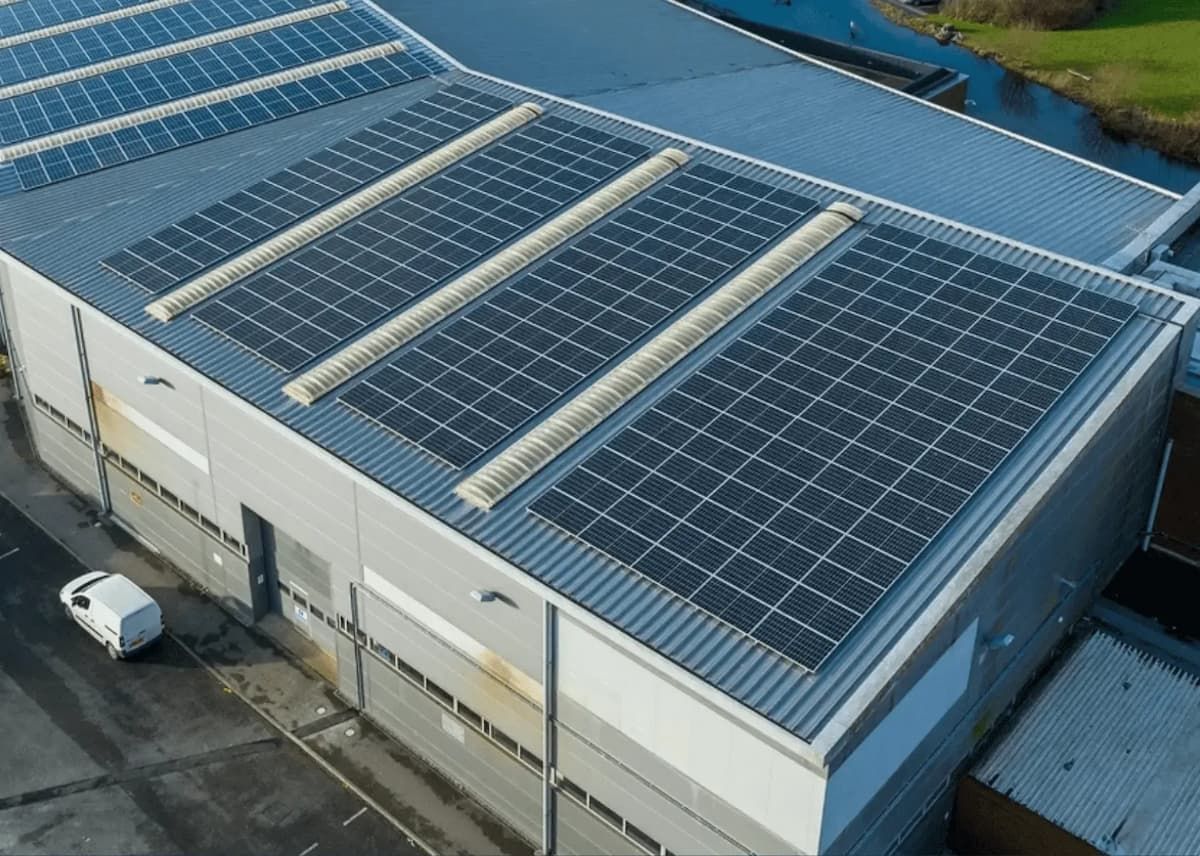
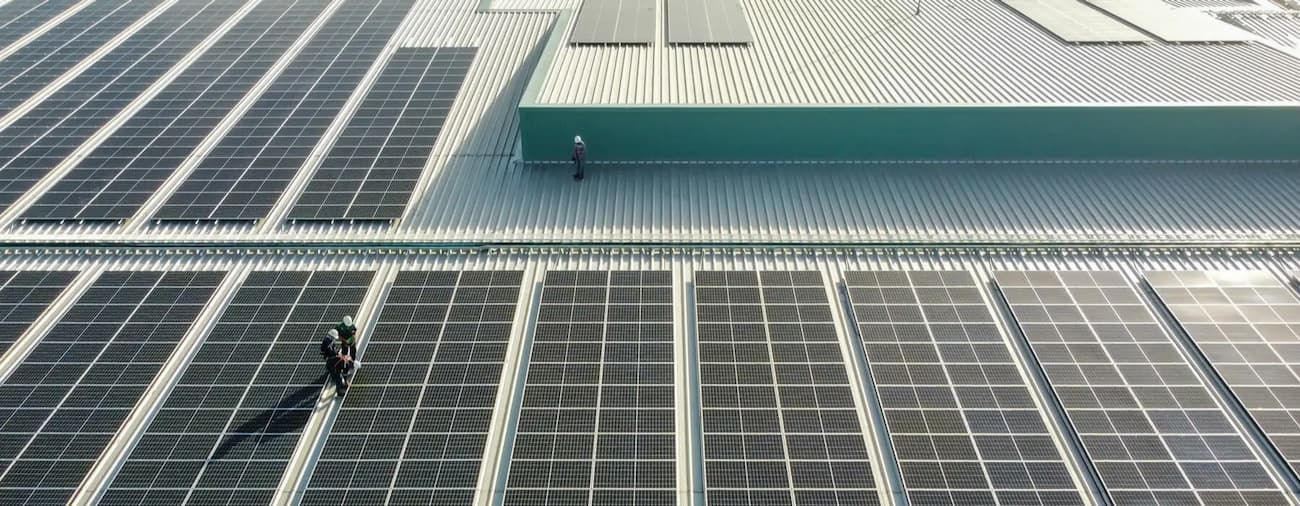
Solar panels on a building's roof, absorbing sunlight. White van parked nearby.

Commercial warehouse storage, with roof mounted solar modules.

Understanding Commercial Solar for Businesses

What is Solar Energy?

The sun emits enough energy to blanket the earth in approximately 1,000 watts / square meter on a sunny day. Solar panels are able to capture 30-50% of this energy and turn it into usable power for people and businesses. Over the past decade, solar material costs have reduced 10x and the technology has emerged as one of the lowest cost, clean electricity sources worldwide. Solar microgeneration systems (sized 150 kilowatts or less) can be added to any building in Canada and typically have warrantied lifespans of 25-30 years.

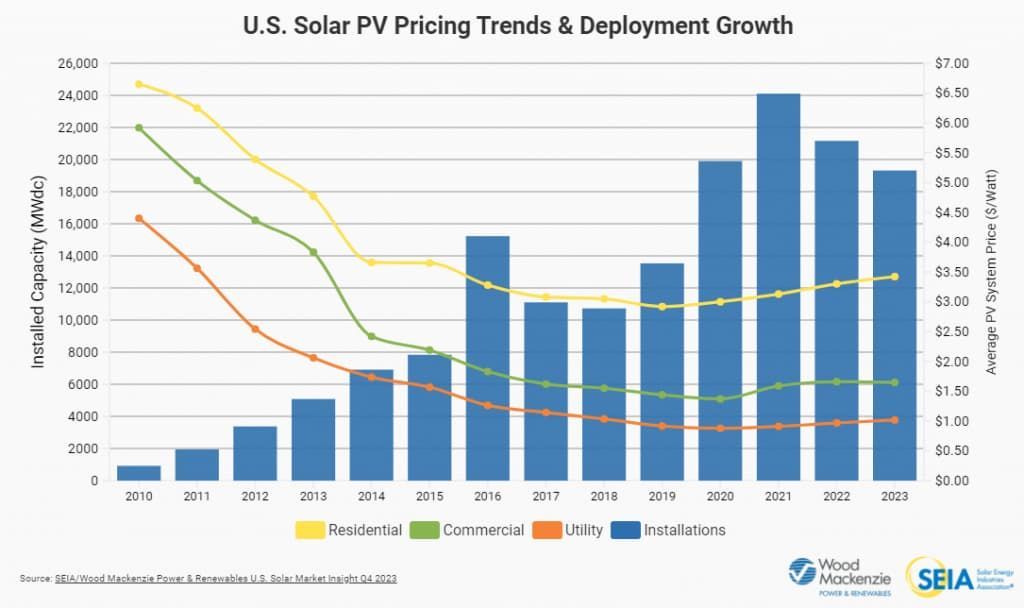
U.S. solar PV pricing trends and deployment growth chart.

Solar Panel Cost in 2024: How to Estimate The Cost of Solar | Solar.com

Why Solar Energy is a Smart Choice for Canadian Businesses

Businesses are some of the largest electricity consumers on the grid. If your business has large refrigeration or heating requirements, motor loads, and/or large work area, your business likely pays $1,000s to $100,000s for electricity every month.


By installing commercial solar, your business can:

  1. Lower your energy bills by using the power generated from your solar system instead of importing from the grid.
  2. Export any unused power back to the grid and get paid for this at market electricity rates.
  3. Collect renewable energy credits (carbon credits) and earn $1,000s in automatically generated credits.
  4. Hedge against electricity price volatility by creating your own low-cost power.


Now, Canadian businesses will also have the opportunity to cash-in on a lucrative tax rebate to help them save even more. Coming soon, your business can also,

  • Earn refundable tax rebate up to a 30% of a solar project's capital cost by registering your program through the Investment Tax Credit program.

What Energy Savings does Solar Create for My Commercial Building or Property?

Solar will not directly reduce your building power consumption; however, it will reduce the amount of electricity you import from the grid because you will be using free energy from your solar system instead. In Canada, almost all provincial and territorial jurisdictions follow Net Metering regulations that allow customers to sell any unused electricity back to the grid. Customers are free to select retailers of their choosing to optimize the rate they buy and sell at. Importantly, net metering provides a credit to their retailer account. These credits can be used for future electricity costs only, they cannot be redeemed for cash. For more information, see the Government of Canada Net Metering examples here.

Exploring the Canadian Investment Tax Credit (ITC) Program

The purpose of the Investment Tax Credit as proposed in Bill C-59 (1) is to encourage the investment of capital in the adoption and operation of clean technology property in Canada. As of this writing, the bill is awaiting Senate review and completed its second reading (of three) as of June 4, 2024.

Overview of the ITC Program for Commercial Solar

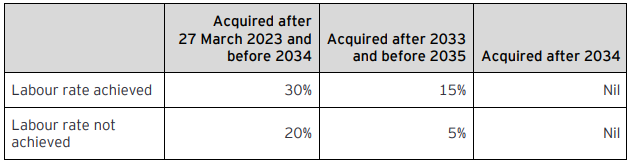
The ITC will be refundable and available to qualifying taxpayers that make eligible investments in clean technology property after 28 March 2023 and before 2035. The credit varies on A) the year in which the property is required and made available for use, and B) whether certain labor requirements are met in construction of the project (see requirements below).

ITC is only available to taxable Canadian corporations that acquire clean technology property (solar, wind, battery storage, off-road EV charging solutions). Highlights of the rebate are as follows:

  • The project owner is eligible for refundable tax rebate up to 30% of the capital cost base.
  • Eligible equipment included in these CCA classes will also be eligible for enhanced first-year depreciation under the accelerated investment incentive if acquired and available for use before 2028 (1).
Table showing labor rate percentages based on acquisition date.

Clean technology ITC rates based on time and labor rate

Requirements of the ITC Rebate Program

General Conditions

  • The project owner must be a “qualifying taxpayer” (a.k.a. taxable Canadian corporations)
  • The project / asset must be situated in and intended to be used exclusively in Canada.
  • The technology must be new property (not previously used equipment).
  • If the technology is to be leased by the taxpayer to another person, it must be to a qualifying taxpayer and not an individual.

Labor Conditions

  • Prevailing Wage Requirement - to receive the maximum tax credit, businesses are required to pay a total compensation package that equates to the prevailing wage (generally based on union compensation from the most recent, widely accepted multi-employer collective bargaining agreement or corresponding project labour agreement in the applicable provincial jurisdiction)
  • Apprenticeship Requirement - at least 10% of tradesperson hours worked are performed by registered apprentices in Red Seal trades on the preparation or installation of specified property.

How the ITC Program Can Work for My Business

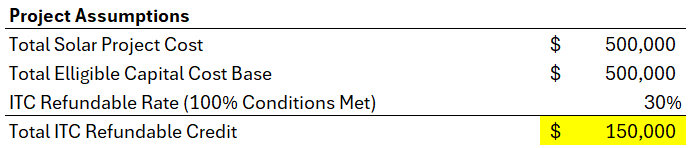
Lets say you spend $500,000 to install solar on the roof of your business warehouse. With 100% of conditions met, the ITC will provide a $150,000 refundable tax credit at a 30% rate. Based on how the legislation stands in June of 2024....

  • If the company is taxable, the ITC would get applied first to taxes payable, with any excess being refunded in cash (via cheque or direct deposit to the corporate business account).
  • If the company is not taxable, the ITC would be refunded in cash (via cheque or direct deposit to the corporate business account).
  • The forms to file will be part of the corporation’s annual tax return – meaning that any resultant refund would be generated once the corporate tax return is processed by CRA and a Notice of Assessment is issued for the tax year.
Solar project cost breakdown with ITC credit: $500,000 cost, 30% refundable rate, resulting in $150,000 credit.

Project payback for Investment Tax Credit

Why Select Evalence as Your Commercial Solar Partner?

Evalence is Alberta's partner for commercial solar solutions that achieve electric performance. We are committed to providing your business a comprehensive solution that...

  1. Delivers predictable energy savings through a well-engineered system design.
  2. Delivers a high return-on-investment by leveraging all available incentives and programs.
  3. Achieves high install quality, low maintenance, and low-failure rate solutions in tough Canadian weather conditions.
  4. Integrates seamlessly into your operation through employee onboarding and training.
  5. Produces a sustainable by-product that enhances your corporate sustainability goals.


Whether its a high-rise, flat-roof, or ground mounted system, Evalence has the team to deliver your next project on-time and on-budget. Get in touch with Evalence today and see how much you can save by installing an Evalence Commercial Solar solution.

Workers on a rooftop solar panel array on a building.

Commercial Solar Solutions for Canadian Businesses

Frequently Asked Questions

Can the rebate be recaptured by the government?

Yes, a recapture of the credit received will apply if the property is converted to a non-eligible use, disposed of or exported from Canada within 10 years of the date it was acquired.

Can the ITC be stacked with other incentives?

The ITC is calculated net of other incentives. The capital cost base on which the ITC is calculated must be adjusted for any other ITCs applicable to the property. Furthermore, where the taxpayer has received assistance, either from the government or non-government organizations, the ITC is calculated on the cost base of the equipment net of any financial assistance received.


Sources

(1) C-59 , 44th parliament, 1st Session November 22, 2021, to present. LEGISinfo. (n.d.). https://www.parl.ca/LegisInfo/en/bill/44-1/c-59

(2) EY Canada. (2023, August 17). Ey tax alert 2023-33 - proposed Clean Technology Investment Tax Credit. EY Tax Alert 2023 no 33 - Proposed clean technology investment tax credit. https://www.ey.com/en_ca/tax/tax-alerts

Recent Posts

By Moha Tuano December 29, 2025
Switching to solar is one of the best investments Alberta homeowners can make — for their homes, their budgets, and the planet. But once you’ve signed your contract, you might wonder — what happens next? At Evalence Renewables, we believe your solar journey should be simple, transparent, and stress-free. Our professional team manages every step — from design to activation — so you can focus on what matters most: enjoying your home and the energy savings that come with it. Here’s a detailed look at what to expect during your solar installation process:
By Moha Tuano December 29, 2025
At Evalence, we speak with Alberta homeowners every day who are interested in solar energy but still unsure how the financial side really works. Many people understand that solar panels generate electricity, but they’re less clear on how that energy translates into real savings on their power bill. The reality is this: one of the biggest reasons solar is so effective in Alberta is net metering , also known as the micro-generation credit system . It’s the behind-the-scenes framework that allows homeowners to turn excess solar production into meaningful, long-term savings.  If you’ve ever wondered how unused solar energy gets credited, why summer production still helps in winter, or how solar keeps electricity costs more predictable, this guide walks you through it — simply and clearly.
By Moha Tuano December 29, 2025
Electric vehicle adoption is accelerating across Alberta, and businesses are increasingly recognizing the value of offering EV charging on-site. From supporting employee commuting to attracting customers and preparing for electric fleets, charging infrastructure is quickly becoming a practical business asset — not just a sustainability feature. Whether your organization is motivated by environmental goals, customer convenience, or future-proofing your operations, installing EV chargers requires thoughtful planning. Commercial charging is significantly different from residential installations, and making the right decisions upfront can substantially reduce costs and operational challenges down the road. At Evalence, we work with Alberta businesses to design and install EV charging systems that are safe, efficient, and built to grow with demand. Here’s what organizations should understand before getting started.